January 29, 2026
After more than three decades working in and around underground tunnelling, one thing has become very clear to me: no matter how advanced our equipment, systems, or processes become, tunnelling remains a deeply human activity.
We work in environments that are dark, noisy, confined, and unpredictable. Conditions change quickly. Pressure is constant. Fatigue is normalised. And yet, much of our safety conversation still assumes that people will always behave rationally, consistently, and confidently.
Anyone who has spent time underground knows that isn’t how it really works.
Over the years, I’ve seen incredible technical advancements in our industry. Monitoring systems are better. Data collection is more sophisticated. Procedures are more detailed. On paper, tunnelling has never been safer.
But from the tunnel face, reality often feels different.
What still matters most underground is not the thickness of a procedure, but the strength of the relationships between the people doing the work. Trust, respect, and care influence decisions long before a document is opened or a rule is quoted.
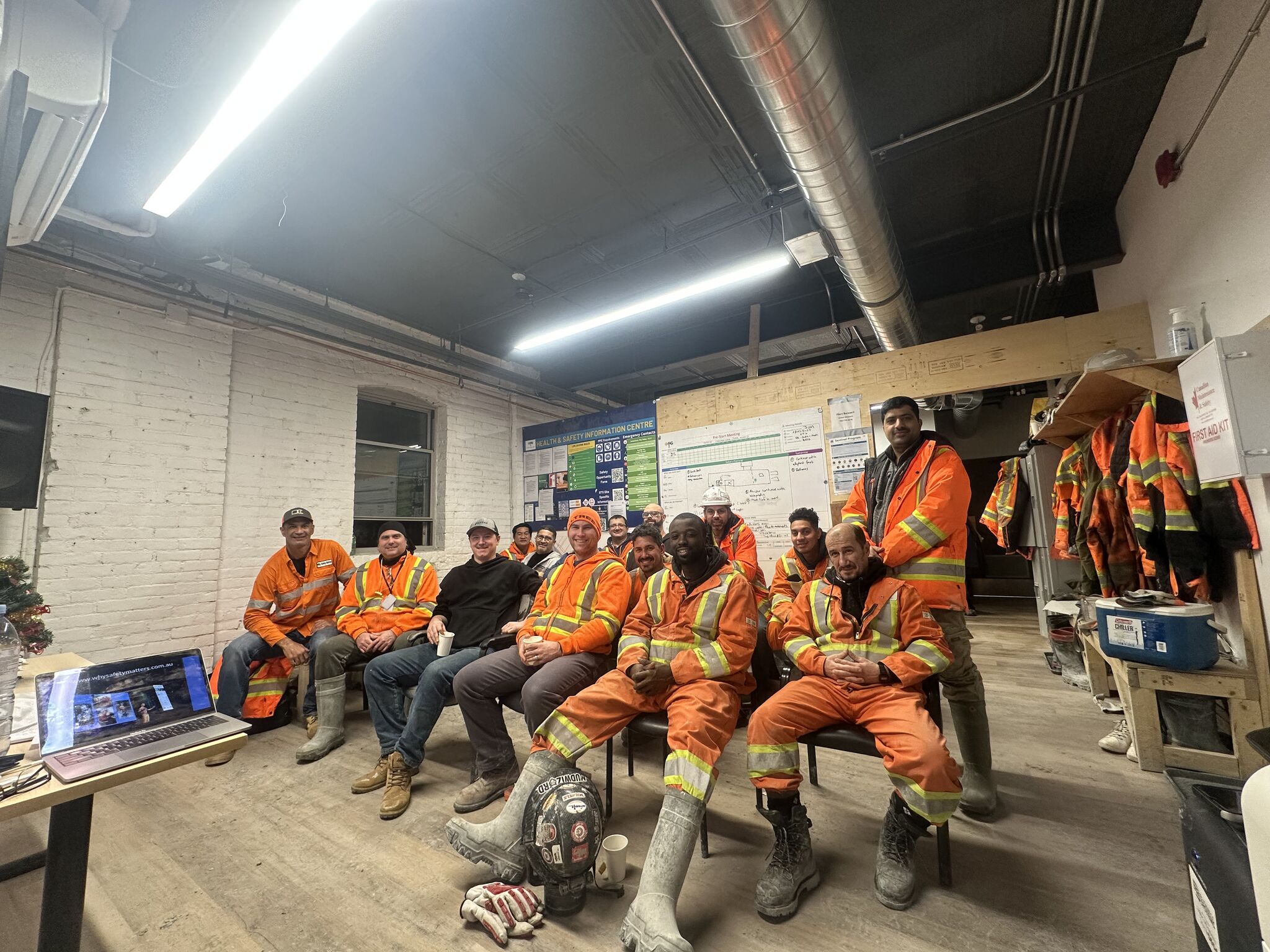
In recent years, I’ve been fortunate to receive many invitations to projects asking me to share my Why Safety Mattersmessage. When I ask why they want it, the response is remarkably consistent. I’m told it’s because the message relates to everyone doing the work, regardless of role or experience. It speaks to people as people first, not just as workers.
More often than not, those inviting me say they’re looking for a reset. Over time, even good crews can develop poor habits, frustration, or a negative culture under sustained pressure. The feedback I hear is that a shared, human conversation about safety, care, and responsibility can interrupt that drift and help groups reconnect with why they do what they do in the first place.
In my early years, like many others, there was an unspoken expectation to push through discomfort, not ask too many questions, and not be the person who slowed the job down. Peer pressure rarely came in the form of direct instruction. More often, it felt like momentum. Like it was easier to keep going than to pause.
With experience and through some very hard lessons, I’ve learned that silence underground is rarely a sign that everything is fine. More often, it’s a sign that people don’t feel safe enough to speak, or don’t believe speaking up will change anything.
This is where leadership matters most.
Caring leadership doesn’t mean lowering standards or avoiding accountability. It means paying attention. It means noticing fatigue. It means explaining decisions. It means creating an environment where pausing is not seen as weakness, and questions are not treated as inconvenience.
When people feel genuinely cared for, they behave differently. They speak earlier. They share concerns. They look out for each other. And in a high-risk environment like tunnelling, early information is often the difference between a near miss and something far worse.
Trust is built in small moments, how pressure is handled, how mistakes are responded to, and how people are treated when production is tight. Over time, those moments shape culture far more than any slogan or policy ever could.
As an industry, we talk a lot about values like safety, integrity, and respect. My experience is that these values only become real when they are felt at the tunnel face. If they don’t translate into how people are treated underground, they quickly lose meaning.
Tunnelling will always involve risk. That’s the nature of the work. But how we lead, how we care, and how we listen can make that risk more manageable, not just technically, but humanly.
Perhaps the next step in improving safety isn’t another system or another layer of process, but a renewed focus on the people who make tunnelling possible in the first place.
Why Silence Underground Doesn’t Mean Everything Is OK
One of the most common assumptions in underground work is that silence means everything is under control. If no one is raising concerns, asking questions, or stopping the job, it’s easy to believe that conditions are acceptable and risks are being managed.
From the tunnel face, silence often means something very different.
In high-risk environments like tunnelling, silence is frequently a form of self-protection. People learn quickly what is rewarded, what is tolerated, and what creates friction. Over time, many workers make a simple calculation: Is it safer for me to speak up, or safer for me to keep going?
That calculation is rarely conscious, and it is rarely selfish. It is shaped by experience.
In my early years underground, there was a strong, unspoken expectation to get on with the job. Asking questions, expressing discomfort, or slowing progress could be interpreted as weakness or an inability to cope. Peer pressure wasn’t loud or aggressive. It showed up as momentum, a sense that everyone else was pushing on, so you should too.
Silence, in that context, wasn’t agreement. It was an adaptation.
Over time, I’ve come to understand that silence underground often reflects uncertainty, fatigue, fear of judgement, or a belief that speaking up won’t change the outcome anyway. In some cases, it reflects loyalty, not wanting to let the crew down or create more pressure for others.
This creates a difficult inconsistency. Many safety systems rely on people speaking up early so risks can be managed before they escalate. Yet the very environments those systems operate in can discourage speaking up, even when individuals recognise that something isn’t right.
Leadership plays a critical role here.
When leaders respond defensively, dismiss concerns, or prioritise progress over conversation, silence grows. When leaders listen, explain, and take concerns seriously, silence starts to break, not immediately, but gradually, as trust builds.
One of the most important lessons I’ve learned is that asking people to “speak up” without changing how leadership responds is ineffective. People don’t stay silent because they lack courage. They stay silent because experience has taught them it’s safer to do so.
Creating conditions where silence reduces requires more than encouragement. It requires leaders to consistently demonstrate that pausing is acceptable, questions are welcomed, and raising concerns will not lead to ridicule, exclusion, or negative consequences.
When silence is reduced, information flows earlier. Near misses are shared. Small issues are addressed before they become big ones. And in a tunnelling environment, where conditions can change rapidly, early information is often the most valuable form of risk control available.
Silence underground should never be interpreted as confirmation that everything is fine. More often, it is a signal that something needs attention, not necessarily in the ground or the process, but in how people feel about being heard.
Perhaps the question for leaders is not “Why didn’t they speak up?” but rather “What have we done to make silence feel safer than speaking?”
Peer Pressure, Momentum, and the Cost of Just Keeping Going
Dallas Adams
In underground tunnelling, peer pressure is rarely obvious. It doesn’t usually come in the form of direct instruction or confrontation. More often, it shows up quietly as momentum, a sense that the job is moving, everyone else is pushing on, and stopping now would create inconvenience or tension.
Momentum can be powerful underground. Once work is underway, it can feel easier to continue than to pause, even when conditions begin to change. People don’t want to be the one who slows the crew down, asks an awkward question, or appears uncertain in an environment that values resilience and capability.
This pressure is not always imposed by others. In many cases, it is internal. Workers absorb the expectations of the environment and place them on themselves. Over time, this can normalise behaviour that sits uncomfortably with formal safety expectations, without anyone consciously choosing to take unnecessary risk.
In my experience, many unsafe decisions are not made because people don’t care, but because they care deeply about doing their job well, supporting their mates, and meeting expectations. The desire to belong and contribute can override hesitation, particularly when there is a belief that stopping will not be supported or understood.
Peer pressure in this form often goes unrecognised because it feels like professionalism rather than pressure. Pushing through fatigue, discomfort, or uncertainty can be mistaken for commitment, when in reality it may be a signal that someone feels unable to pause.
Leadership plays a critical role in either reinforcing or interrupting this momentum. When leaders reward uninterrupted progress and respond negatively to pauses, momentum becomes self-reinforcing. When leaders acknowledge uncertainty and model the behaviour of stopping to reassess, momentum can be safely broken.
One of the most important leadership behaviours underground is the ability to slow things down without assigning blame. Creating space to pause, check conditions, and reset expectations does not weaken performance, it protects it.
The cost of unchecked momentum is rarely immediate. It accumulates quietly through fatigue, assumption, and normalisation of risk. By the time something goes wrong, the decision to “just keep going” may feel distant and unremarkable, even though it played a critical role.
Understanding peer pressure as momentum rather than confrontation helps explain why people sometimes act against their better judgement. It also highlights why creating environments where pausing is acceptable is a leadership responsibility, not an individual burden.
In high-risk tunnelling environments, the ability to recognise and interrupt momentum may be one of the most effective safety skills a leader can develop.
Leadership at 2am — What Really Shows Up on Night Shift
Leadership underground often looks very different depending on the time of day. During normal working hours, support is close by. Managers are available. Decisions can be escalated. Energy levels are higher, and problems feel more manageable.
At 2am, all of that changes.
Night shift brings fatigue, reduced resources, and a sense of isolation that is difficult to explain unless you’ve experienced it. Decision-making becomes slower. Patience is thinner. Small issues can feel much bigger, and the margin for error narrows.
This is where leadership truly shows up.
On night shift, crews rely heavily on the person in charge. There is less room for ambiguity and less tolerance for inconsistency. How a leader communicates, reacts, and manages pressure during these hours leaves a lasting impression on the crew.
Fatigue plays a significant role. It affects judgement, reaction time, and emotional regulation. People may be less likely to question decisions or raise concerns, not because they don’t care, but because they are tired and focused on getting through the shift safely and efficiently.
In these conditions, leadership tone matters more than words. A calm, steady presence can reduce anxiety and help crews stay focused. A reactive or dismissive response can quickly erode confidence and increase risk.
One of the challenges of night shift leadership is balancing the pressure to maintain progress with the responsibility to recognise when conditions have changed. Fatigue can make it tempting to push through issues rather than pause and reassess, particularly when there is a desire to finish tasks before daylight or avoid handing problems over to the next shift.
However, the decision to pause on the night shift often requires more courage than during the day. It means standing by a judgement without immediate validation from management and accepting responsibility for the outcome.
Crews notice this. They remember who was willing to slow things down when it mattered, and who wasn’t.
Leadership at 2am is not about authority or technical expertise alone. It is about presence, consistency, and care. It is about recognising that people are operating under different physical and mental conditions and adjusting expectations accordingly.
When leaders acknowledge fatigue, communicate clearly, and make space for reassessment, trust is strengthened. When they ignore these factors, trust quietly diminishes.
Night shift has a way of revealing the truth of leadership. Without the structure and support of the day, what remains is behaviour, judgement, and intent. Those moments shape culture more powerfully than any meeting or presentation ever could.
In tunnelling, where risk does not sleep, leadership at 2am may be one of the most important contributions a leader makes to safety.
Why Rules Alone Don’t Work Underground
Rules are an essential part of tunnelling. Procedures, permits, risk assessments, and controls exist for good reason, and over time they have undoubtedly improved safety outcomes across the industry.
But anyone who has worked underground knows this:
rules alone don’t keep people safe.
If they did, incidents would have disappeared long ago.
Underground tunnelling is dynamic. Conditions change, sometimes subtly and sometimes rapidly. Ground behaves differently than expected. Equipment doesn’t always perform as planned. Fatigue builds. Pressure fluctuates. In these moments, people don’t reach first for a document, they rely on judgement, experience, and the cues around them.
This is where the limitations of rules become visible.
Rules are written for consistency. Underground work requires adaptability. When situations fall outside what is clearly defined, people must interpret intent rather than instruction. How they do this is shaped less by the rule itself and more by the culture in which it is applied.
In my experience, rules tend to fail not because they are wrong, but because of how they are delivered and led. When rules are presented as non-negotiable instructions without explanation, people comply outwardly but disengage inwardly. When they are enforced inconsistently, trust erodes. When they are seen as disconnected from reality underground, they are worked around rather than worked with.
Compliance does not equal commitment.
Most workers underground want to go home safely. They don’t wake up intending to break rules. However, when rules feel impractical, overly rigid, or imposed without understanding, people begin to rely on informal norms and peer behaviour instead.
This is not defiance, it is adaptation.
Leadership plays a critical role in how rules function in practice. When leaders explain the purpose behind rules, acknowledge limitations, and invite discussion about how they apply in real conditions, rules become tools rather than obstacles.
When leaders rely solely on authority and enforcement, rules become something to survive rather than something to believe in.
One of the most effective safety behaviours I’ve observed underground is when a leader pauses work and says, “This is what the rule says, but let’s talk about how it actually applies here.” That conversation often reveals risks that paperwork alone would never identify.
Rules work best when they are supported by trust, care, and open communication. Without those elements, rules become fragile, followed when convenient and bypassed when pressure increases.
In tunnelling, safety is rarely compromised by a single broken rule. It is compromised when people stop engaging with the intent behind the rules and instead focus on getting through the shift.
Rules matter. Systems matter. But leadership is the interface between written instruction and human behaviour.
Until that interface is acknowledged and strengthened, rules alone will never be enough to keep people safe underground.
The Supervisor in the Middle
There is a role in tunnelling that carries more weight than most people realise.
It’s the supervisor in the middle.
Not senior enough to set strategy.
Not part of the crew anymore.
Expected to deliver results, manage risk, enforce rules, and still maintain trust on both sides.
It’s a difficult place to stand.
Supervisors are often promoted because they are good workers. They are reliable, productive, and capable under pressure. What is less often considered is whether they have been prepared to manage people, expectations, and competing demands.
Once in the role, many supervisors find themselves caught between two worlds.
From above, there is pressure to maintain progress, meet targets, and manage compliance. From below, there is responsibility for the safety, wellbeing, and morale of the crew. These pressures do not always align, and when they don’t, the supervisor becomes the buffer.
Holding that position day after day takes a toll.
Supervisors are expected to absorb frustration from both directions, often without a space to express their own uncertainty or fatigue. When support is limited, it can feel safer to default to rules, authority, or distance rather than risk appearing unsure.
Over time, this can change how supervisors lead.
Some become overly rigid, relying on procedure to protect themselves. Others withdraw emotionally, focusing on tasks rather than people. Neither approach reflects a lack of care, more often, it reflects a lack of support.
From the tunnel face, crews notice this shift quickly. They feel when a supervisor is under pressure, even if it’s never spoken about. Trust can weaken not because the supervisor doesn’t care, but because they no longer feel able to show it.
This is where the industry often gets it wrong.
We ask supervisors to lead culture, safety, and performance, yet we rarely care for them in the same way. We expect resilience without recognising load. We talk about leadership but provide limited tools to manage the human side of the role.
Good supervisors don’t want to choose between the organisation and the crew. They want to do the right thing by both. When they feel supported to make balanced decisions, even difficult ones, leadership improves for everyone.
The most effective supervisors I’ve worked with were not the loudest or most authoritarian. They were the ones who communicated honestly, filtered pressure where possible, and were willing to explain decisions rather than hide behind them.
They understood that leadership is not about being right all the time, but about being consistent, fair, and present.
If we want better outcomes underground, we need to look after the people we place in the middle. Supporting supervisors is not a weakness in the system, it is a strength.
Because when supervisors are supported, they lead better.
When they lead better, trust grows.
And when trust grows, safety follows.
Closing Reflections
Tunnelling will always be complex, demanding, and high risk. No amount of technology, procedure, or process will ever remove that reality entirely. What has become clear to me over time, however, is that how we lead and how we treat people has as much influence on safety as any system we design.
The reflections shared in this series are not intended to provide definitive answers or universal solutions. They are offered as observations from the coalface — moments, patterns, and behaviours that repeat themselves across projects, roles, and generations.
Care builds trust.
Trust reduces silence.
Awareness interrupts momentum.
Leadership shows up most when pressure is highest.
Rules work best when they are led, not enforced.
And supervisors carry more weight than we often acknowledge.
None of these ideas are new, yet they remain easy to overlook in an industry driven by deadlines, metrics, and delivery. Perhaps that is why they are worth revisiting.
If these pieces encourage even a brief pause, a conversation, a question, or a different response under pressure, and then they have served their purpose. Because in tunnelling, small shifts in behaviour often make the biggest difference.
Ultimately, safety is not something we apply to people.
It is something we create with them.